
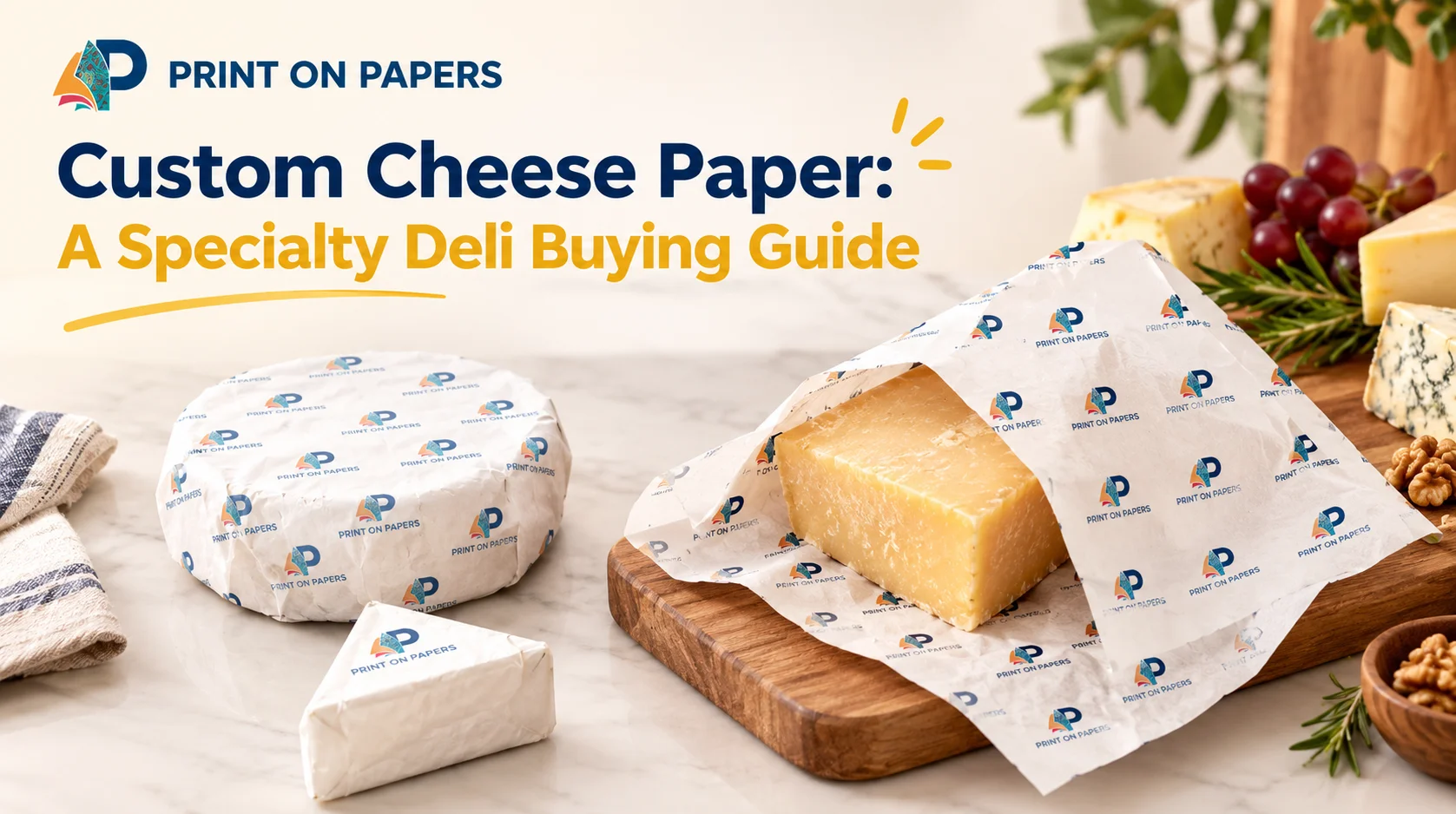
Custom Cheese Paper: Why Specialty Delis Need a Different Paper
Specialty delis lose sellable cheese every week to the wrong wrap, not bad storage. Custom cheese paper is built to hold cheese at the right moisture level instead of trapping it or letting it dry out. This guide covers the real cost of a bad wrap, the warning signs it is time to switch, and how to check a supplier before you place an order.
TL;DR
- A bad cheese wrap shows up as shrink on the counter, not just a packaging complaint.
- Four early signs tell you your current paper was never built for cheese.
- A small cheese case can lose more, proportionally, than a large one when a wedge spoils.
- Check a supplier on five points before your first order.
The Real Cost of Wrapping Cheese in the Wrong Paper
Most delis do not track cheese loss the way they track meat or produce loss. It hides in small pieces. A trimmed rind here, a wedge pulled from the case because it looks off, ten minutes a shift spent rewrapping cheese that sweated overnight.
Add that up over a month, and it stops being small. A block of aged cheddar or a wheel of brie costs real money before it ever reaches the case. Losing even a few wedges a week to bad wrap is a cost most shops are absorbing without ever naming it.
The paper is doing that damage quietly. It is worth naming it.
Signs Your Current Wrap Isn’t Built for Cheese
Not every deli needs to switch today. But a few signs point straight at the wrap, not the fridge temperature or the cheese itself.
| What You’re Seeing | What It Usually Means |
| Condensation under the wrap by the next morning | The paper is sealing in moisture instead of managing it |
| Cheese sticking to the paper when unwrapped | The coating sits too tight against the surface |
| Rind drying and cracking within a few days | The wrap is letting too much moisture escape too fast |
| A musty smell building up in wrapped cheese | Trapped moisture is feeding early mold growth |
If two or more of these show up regularly, the wrap is the first thing worth changing, before touching the fridge settings or the display layout.
What a Cheese Specific Paper Actually Changes
Custom cheese paper is built with a structure meant to hold moisture in a narrow, workable range instead of letting it swing to one extreme or the other. That’s the short version. For the full breakdown of how the layers work and which FDA rule covers it, our guide on ordering custom cheese paper wholesale already covers that in detail, so we won’t repeat it here.
What matters for this decision is simpler. The paper is doing a job your current wrap was never designed for. Full product specs live on the custom cheese paper page.
How Cheese Paper Compares to Other Wrap Options
Delis often default to whatever wrap they already stock, without comparing it against the alternatives side by side.
| Wrap Type | Breathable | Good for Aging | Branding Option |
| Plastic cling film | No | No | No |
| Vacuum seal pouch | No | Only short term | Limited |
| Plain deli paper | Partly | No | Yes, but not built for cheese |
| Custom cheese paper | Yes | Yes | Yes |
Vacuum sealing has its place for shipping or long holds, but it isn’t built for a case where cheese needs to keep aging and breathing while it sits on display. For retail packs that do get sealed after wrapping, custom heat seal paper pairs well with cheese paper for that part of the line.
How to Evaluate a Cheese Paper Supplier Before You Switch
Before placing a first order, check five things.
- Minimum order fit. A minimum built for a large producer doesn’t fit a single specialty counter. Ask what the floor actually is.
- A specific FDA citation. A supplier who can name the exact regulation section, not just say “FDA approved,” has done their homework. Paper touching cheese falls under 21 CFR 176.170, the rule for paper in contact with aqueous and fatty foods.
- Sample sheets before a full order. Any supplier confident in their paper will send a sample before asking for a commitment.
- Realistic turnaround. Ask for the actual production window, not a marketing promise.
- Range beyond cheese paper. A supplier who also carries custom papers for your other counters saves you from managing five vendors instead of one.
Is Switching Worth It for a Small Cheese Counter?
Yes, and size is where this gets misunderstood most. Specialty cheese demand isn’t shrinking. The global specialty cheese market is projected to reach $31.2 billion in 2026 and grow toward $39.8 billion by 2031, according to Mordor Intelligence research covered by DairyReporter. A small counter selling into that demand loses proportionally more when a wedge spoils, since there’s less volume to absorb the loss.
A low order minimum means switching doesn’t require betting on a large volume commitment just to find out if it helps.
Ready to See If Your Cheese Case Needs a Different Wrap?
Conclusion
The wrap on your cheese counter is either protecting your margin or quietly working against it. If wedges are sweating, sticking, drying out, or picking up a musty smell before they sell, the fix usually starts with the paper, not the fridge. A cheese specific wrap costs a few cents more per sheet and buys back the product you would otherwise be trimming or tossing. That trade is worth making at almost any counter size.
Frequently Asked Questions
How do I know if my cheese counter needs a different wrap?
Look for condensation under the paper by the next morning, cheese sticking to the wrap when unwrapped, rind cracking within a few days, or a musty smell building up. Two or more of these happening regularly means the current wrap is working against you.
Do small delis need custom cheese paper, or is it only worth it at scale?
It’s worth it at a small scale too, since orders start at a 500 sheet minimum rather than a bulk producer volume. A small counter also loses more proportionally per spoiled wedge, since there’s less overall volume to absorb that loss.
What should I ask a cheese paper supplier before placing my first order?
Ask for their actual minimum order size, a specific FDA regulation citation rather than a vague safety claim, a sample sheet before a full order, a realistic production timeline, and whether they carry other food paper types beyond cheese paper.
Can vacuum sealing replace cheese paper for storage?
Not for active display or aging. Vacuum sealing works for shipping or long holds, but it stops the cheese from breathing, which is a problem for anything still meant to age or sit out on a case.
Does the paper alone cause cheese to sweat, or is it a storage temperature issue too?
The paper is usually the direct cause of surface sweating, since a fully sealed or non-breathable wrap traps moisture against the rind regardless of fridge temperature. Storage temperature affects overall shelf life, but it doesn’t fix condensation caused by a wrap with no moisture release.