
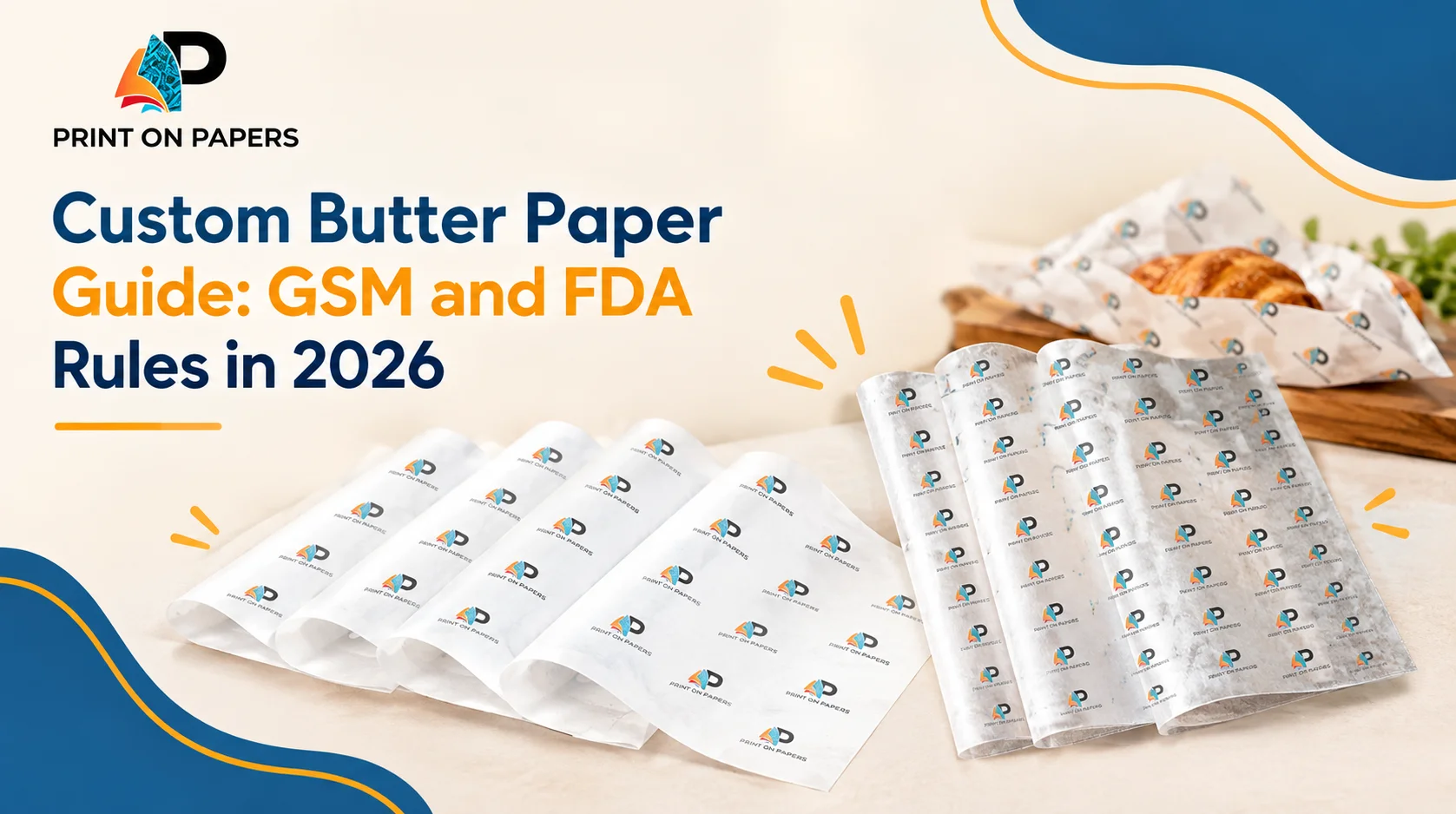
Custom Butter Paper for Delis and Bakeries: What You Need to Know
TL;DR: Custom butter paper isn’t just relabeled greaseproof paper. It’s a dairy grade, wet strength sheet built to survive direct contact with butter and other high fat dairy. The GSM you need changes depending on whether you’re wrapping butter, cheese, or pastry, and the FDA rule that actually applies is 21 CFR 176.170, not the 176.180 most suppliers default to. Get that spec wrong once and you’ll be reordering within two weeks.
Table of Contents
- What Is Custom Butter Paper? A 2026 Guide for Food Businesses
- What Is Butter Paper Used For?
- Is Butter Paper the Same as Greaseproof Paper?
- What GSM Should Butter Paper Be?
- Why Wet Strength Matters
- Is Custom Butter Paper FDA Compliant for Dairy Contact?
- FAQs About Custom Butter Paper
- How to Order Custom Butter Paper
- Get a Free Quote
- Conclusion
What Is Custom Butter Paper? A 2026 Guide for Food Businesses
Picture this. A bakery orders 2,000 sheets of what the supplier calls butter paper. Two weeks later, the sheets are tearing the second they touch a fresh block. Nobody ordered the wrong quantity. They ordered the wrong grade.
Custom butter paper is a dairy specific, wet strength paper printed with a business’s logo, made to hold up against butter, margarine, and other high fat dairy without breaking down mid shift. It belongs to a wider family of custom papers built for food contact, and the grade matters more than most suppliers ever mention upfront.
What Is Butter Paper Used For?
Butter paper does more than wrap butter, though that’s the obvious job. It lines bakery trays, separates dairy in cold storage, and shows up at deli counters wherever butter or soft cheese gets cut to order. Because it sits directly against fat and often stays cold for hours, it can’t be treated like a general purpose wrap.
Restaurants use it too, mostly for portioning butter at the table. It holds its shape without sticking to the product, and that detail matters more than it sounds like it should. A sheet that clings to the butter, or leaves fiber behind on it, was never built for the job in the first place.
Is Butter Paper the Same as Greaseproof Paper?
Short answer, not quite. The two overlap enough to cause confusion, but the difference becomes obvious the moment real fat and moisture get involved, not on a spec sheet nobody bothers reading.
Here’s where they actually differ. Greaseproof paper earns its oil resistance from how tightly the cellulose fibers get refined during manufacturing, which works fine against everyday grease, think fried food or a sandwich. Dairy grade custom butter paper takes that a step further with a higher wet strength rating. That means the sheet keeps its tensile strength even after it’s fully saturated with fat and moisture, which is exactly the condition it’s sitting in when it’s wrapped around a cold block of butter for hours at a time.
| Feature | Butter Paper (Dairy Grade) | Greaseproof Paper (General) |
| Primary use | Butter, margarine, soft dairy | Fried food, sandwiches, general wrap |
| Wet strength | High, holds up saturated with fat | Moderate, shorter contact time |
| Typical GSM | 28 to 32 GSM | 30 to 40 GSM |
| FDA basis | 21 CFR 176.170 (fatty foods) | 21 CFR 176.170 or 176.180 depending on use |
If your product is high fat and stays wrapped for hours or days, dairy grade butter paper is the safer spec. If it’s a quick wrap for something fried and served within minutes, general greaseproof paper often does the job.
Custom Butter Paper vs Greaseproof Paper in Practice
There’s a one question test here. Ask your supplier whether the paper is rated for sustained fat contact or just short term grease resistance. If they can’t give you a number back, you’re about to find out the hard way which one you got.
What GSM Should Butter Paper Be?
GSM stands for grams per square meter, and it tells you how thick and how strong a sheet actually is. More GSM doesn’t automatically mean better. It depends entirely on what’s going on top of the paper.
- Butter and margarine: 28 to 32 GSM. Light enough to fold cleanly, but still strong enough for the wet strength coating to do its job.
- Cheese: 30 to 35 GSM. A touch heavier, since firmer cuts and longer counter time ask more of the sheet.
- Pastry and lamination work: 35 to 45 GSM. It has to survive rolling, folding, and the extra fat content that comes from working with butter layers directly.
Order one GSM to cover all three jobs, and you’re quietly shortchanging at least two of them. It’s a common mistake, and an easy one to avoid once you know to ask.
Why Wet Strength Matters
Wet strength is not the same claim as grease resistant. Grease resistance is about oil not soaking through. Wet strength is about the paper keeping its physical strength, not tearing or going limp, once it is saturated. Custom butter paper needs both, because butter is both fatty and holds moisture. A sheet that only resists grease but has low wet strength will still fail, just slower.
This is the exact failure mode behind most “wrong paper” complaints. A business orders standard food paper, assumes food safe means fit for purpose, and finds out otherwise when the paper goes soft against a block of butter mid shift.
Is Custom Butter Paper FDA Compliant for Dairy Contact?
Yes, when it is made correctly, and the regulation that applies matters more than most suppliers mention. The FDA governs food contact paper under 21 CFR Part 176, and within that part, there are two separate sections. Section 176.170 covers paper in contact with aqueous and fatty foods. Section 176.180 covers dry food only.
Butter itself is fatty and semi aqueous, which is exactly why 176.170 is the right citation, not 176.180. Most competing pages just write “FDA 21 CFR 176” and stop there, which technically leaves out the part that actually matters. If a supplier can tell you the exact subsection for your product without hesitating, that’s someone who understands the spec, not just someone repeating the marketing line around it.
Beyond the FDA rule, look for FSC certified base stock and soy based, food grade printing inks if the paper will carry your logo. These are the same standards covered across our broader custom food papers line.
Frequently Asked Questions About Custom Butter Paper
| Question | Answer |
| What is butter paper used for? | Mostly wrapping butter and dairy, lining bakery trays, and portioning butter table side at restaurants and delis. |
| Is butter paper the same as greaseproof paper? | Not quite. Butter paper is the dairy grade version, built with higher wet strength to survive sustained fat contact, something standard greaseproof paper isn’t rated for. |
| What GSM should butter paper be? | Around 28 to 32 GSM for butter and margarine, 30 to 35 for cheese, and 35 to 45 if it’s headed into pastry or lamination work. |
| Can custom butter paper be printed with a logo? | Yes, it prints in CMYK on FSC certified stock, the same process used across the rest of the custom papers lineup. |
| Is custom butter paper food safe for direct dairy contact? | Yes, as long as it meets FDA 21 CFR 176.170, the section that actually covers fatty and aqueous food contact. |
How to Order Custom Butter Paper
Minimum orders start at 500 sheets, with pricing from $0.20 per sheet depending on GSM and print complexity. Standard production takes 7 to 10 working days from proof approval, with a rush option in 5 to 7 days. Shipping goes out free worldwide through DHL, FedEx, and UPS, dispatched from Valley Stream, New York.
Before you place an order, confirm three things with your supplier. First, the GSM matches your actual use case, not a generic default. Second, the paper is rated for wet strength, not just grease resistance. Third, the compliance sheet names 176.170 specifically. You can review full specs and place an order directly on the custom butter paper product page.
Get a Free Quote
Ready to stop guessing on GSM and compliance? Get Your Free Quote Now →
Send your paper type, size, and order volume, and you will get pricing and a production timeline back directly, no generic sales pitch attached.
Conclusion
Custom butter paper only does its job when the spec matches the product. Get the GSM right for what you are wrapping, confirm the wet strength rating, and check that your supplier is citing 176.170, not just a vague “FDA compliant” claim. That is the difference between a paper that holds up through a full shift and one that tears the moment it meets a cold block of butter. Print On Papers builds every sheet in the custom papers line to that standard, starting with the spec, not the marketing copy.