
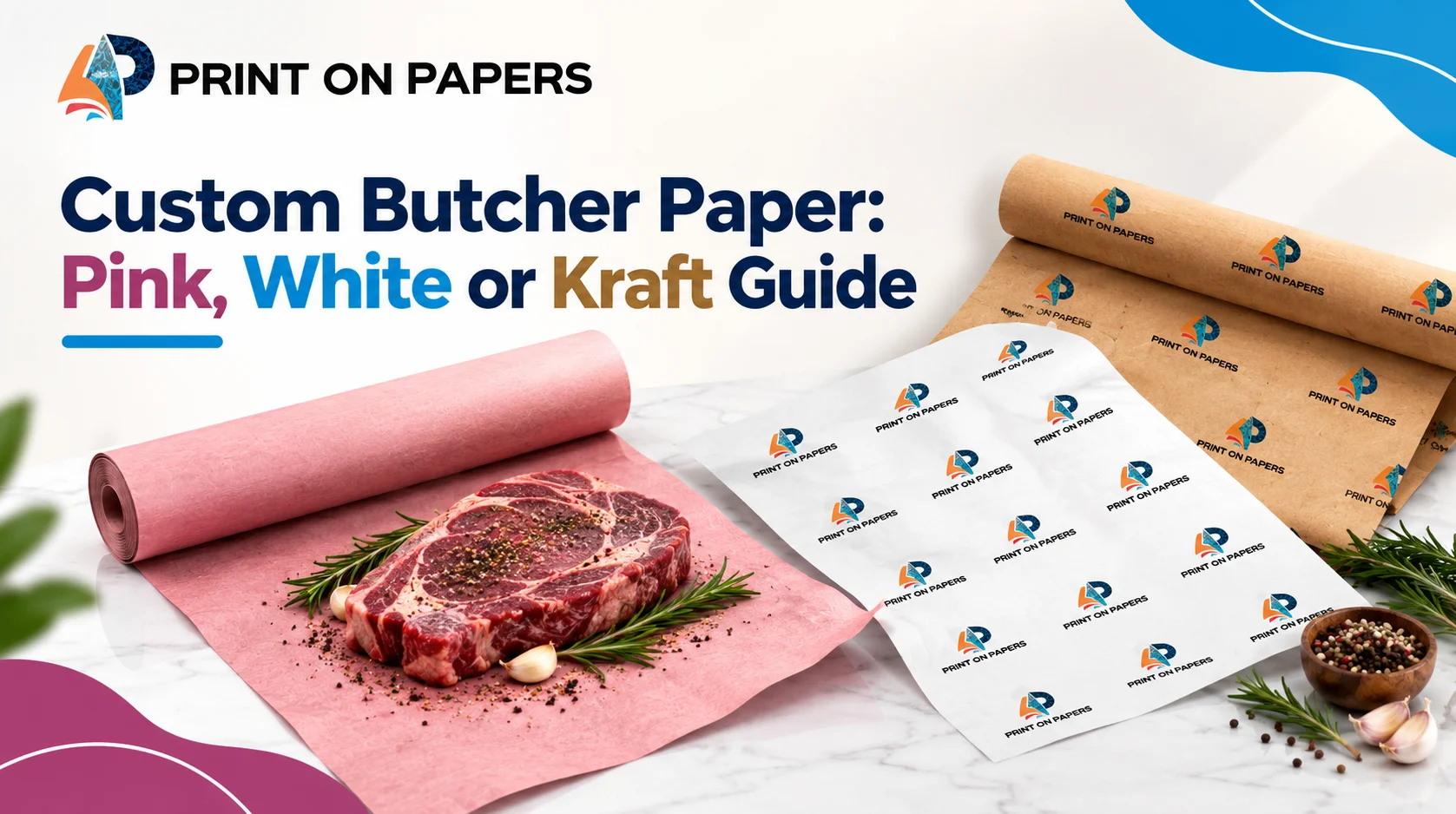
Custom Butcher Paper for BBQ and Restaurants: Pink, White, or Kraft?
TL;DR: Pink butcher paper is unbleached and breathable, best for smoking meat low and slow. White butcher paper is bleached and sometimes wax coated, better for the counter than the smoker. Kraft butcher paper runs heavier, built for wrapping and short term storage, not for the smoker. All three can meet FDA food contact rules, but only the right one keeps flavor and safety intact.
Table of Contents
- What Is Custom Butcher Paper in 2026?
- Is Butcher Paper Food Safe for Direct Meat Contact?
- What GSM Is Butcher Paper, and Does It Change by Color?
- Pink vs White vs Kraft: What Actually Sets Them Apart
- Is Pink Butcher Paper Better Than White for Smoking?
- Custom Printed Butcher Paper for Restaurants and BBQ Brands
- FAQs About Custom Butcher Paper
- Get Your Custom Butcher Paper Quote Today
A pitmaster grabs leftover white paper from the sandwich station to wrap a brisket. Twenty minutes later, the smoker smells like melted wax, and the bark tastes off. That one mix up, grabbing the wrong roll under pressure, is why restaurants and BBQ businesses go looking for custom butcher paper in the first place. Nobody wants a supply problem to become a flavor problem twice.
Custom butcher paper is a food grade wrapping paper made from wood pulp, used to wrap raw meat, smoke briskets, and line counters, and it can be printed with a business logo for branding. It comes in pink, white, or kraft, and the right pick depends on heat, moisture, and whether the paper touches food during cooking or only during storage.
What Is Custom Butcher Paper in 2026?
Custom butcher paper starts as plain kraft pulp, usually from southern pine, then gets treated with a light sizing agent. That sizing step is what stops the paper from falling apart the moment it touches a wet cut of meat.
The word “custom” simply means a logo, color, or pattern gets printed on it before it ships. A steakhouse wrapping to go orders, or a BBQ brand shipping brisket kits, uses the same base paper as a butcher counter, just with branding added. Demand for this kind of paper is not shrinking. The U.S. market for paper based disposable foodservice packaging, which covers butcher paper alongside wraps, bags, and cartons, was valued at $13.6 billion and is projected to reach $16.0 billion by 2027, growing about 3.3 percent a year, according to Freedonia Group’s industry study on U.S. paper foodservice packaging. The full product range sits on the custom food papers page, where butcher paper sits alongside other food service papers built for the same kind of direct contact use.
Is Butcher Paper Food Safe for Direct Meat Contact?
Yes, when it is genuine butcher paper and not a substitute. Food contact paper sold for this purpose falls under 21 CFR Part 176, the federal rule covering paper and paperboard that touches food. The FDA sets limits under this rule on what can go into the pulp, coatings, and additives.
In February 2024, the FDA confirmed that manufacturers had stopped selling PFAS based grease proofing agents for food contact paper in the United States. That means paper made and sold today should not rely on the forever chemicals once used to block grease. The FDA’s own announcement is public on its authorized uses of PFAS in food contact applications page.
Wax coated paper is a separate issue. Wax is not banned, but it is not built for heat. Wax paper and freezer paper should never go in a smoker, since the coating can melt, smoke, or catch fire.
What GSM Is Butcher Paper, and Does It Change by Color?
Butcher paper generally runs between 40 and 90 GSM, and where a specific roll falls in that range depends on the job, not the color alone. Pink smoking paper tends to sit toward the lighter end, closer to 40 to 50 GSM, since it needs to stay porous enough for smoke to pass through. Heavier kraft, closer to 90 GSM, is built for wrapping bigger cuts before cold storage, where tear resistance matters more than breathability.
Color changes the bleaching and sometimes the coating. It does not change the GSM by much on its own. The current federal text covering these paper components is on file at 21 CFR Part 176 through the eCFR.
Pink vs White vs Kraft: What Actually Sets Them Apart
Where Custom Butcher Paper Fits Between the Three
Pink butcher paper, also called peach paper, is unbleached. Its color comes straight from the southern pine pulp, not a dye. It stays porous, so smoke and moisture pass through it, which is why pitmasters wrap brisket in it during the final stretch of a long cook.
White butcher paper goes through a bleaching process to strip out that natural color. It looks cleaner on a counter or in a sandwich wrap, but some white paper carries a wax coating on one side. That coating is the exact failure point in the story at the top of this page, wax meeting direct heat.
Kraft butcher paper is unbleached like pink, but heavier and less refined. It handles short term wrapping and storage well, though it is not the first pick for a smoker.
| Paper Type | Bleaching | Best Use | Smoker Safe |
| Pink (Peach) | Unbleached | Smoking brisket, ribs, pork | Yes |
| White | Bleached, sometimes waxed | Counter wrap, sandwiches | Only if unwaxed |
| Kraft | Unbleached | Wrapping, short term storage | Not recommended |
Is Pink Butcher Paper Better Than White for Smoking?
For smoking specifically, yes. Pink paper is more breathable, so it lets smoke reach the meat while holding in enough moisture to keep it from drying out. White paper can work if it is confirmed wax free, but most kitchens keep a separate roll of pink paper just to remove the guesswork during a long cook.
Neither paper should touch an open flame directly. Both are built for wrapped, indirect heat inside a smoker, well under the point where the paper itself would scorch.
Custom Printed Butcher Paper for Restaurants and BBQ Brands
A butcher shop, a BBQ restaurant, and a meat delivery brand all use the same base paper, just printed differently. Custom butcher paper lets a business put its name on something a customer already associates with fresh, cared for meat. Here is exactly what that looks like as a product, not a general description:
| Spec | Detail |
| GSM Range | 40–90 GSM |
| Color Options | Pink (peach), white, natural kraft |
| Format | Flat sheets or rolls, 12″, 18″, or 24″ widths |
| Minimum Order | 500 sheets |
| Price | From $0.24/sheet |
| Production Time | 7–10 working days, rush in 5–7 days |
| Shipping | Free worldwide via DHL, FedEx, or UPS, from Valley Stream, New York |
Businesses running a wider food menu often pair butcher paper with other papers from the same supplier at the same specs. A burger counter might add custom hot paper for holding sandwiches warm, while a bakery or bagel shop adds general custom food wrapping paper for daily counter service. Ordering all of it from one supplier keeps GSM, coating, and branding consistent across the whole menu, not just the smoker station.
Get Your Custom Butcher Paper Quote Today
Guessing which roll is safe for the smoker should not happen mid shift. Once the right color and GSM are locked in, the next step is getting the print specs and quantity confirmed before the next order goes out.
Request Your Free Custom Butcher Paper Quote →
Conclusion
Pink, white, and kraft butcher paper all start from the same pulp, but they stop being interchangeable once heat and food contact enter the picture. Pink handles the smoker. White suits the counter, as long as it is not waxed. Kraft is for wrapping, not cooking. Getting custom butcher paper in the right GSM, with the right coating, is what keeps a kitchen from repeating a mistake like a scorched, wax tainted brisket. Print On Papers builds each type to the same food contact standard, at the same 500 sheet minimum, so the only decision left is which one matches the menu.
FAQs About Custom Butcher Paper
| Question | Answer |
| Is pink butcher paper better than white for smoking? | Yes, for smoking. Pink paper is unbleached and more breathable, which helps smoke reach the meat while holding in moisture. White paper only works if it is confirmed free of wax coating. |
| Is butcher paper food safe for direct meat contact? | Yes. Genuine butcher paper is regulated under 21 CFR Part 176, and PFAS based grease proofing agents were phased out of U.S. food contact paper by February 2024, according to the FDA. |
| What GSM is butcher paper? | Most butcher paper falls between 40 and 90 GSM, with pink smoking paper on the lighter end and kraft wrapping paper on the heavier end. |
| Can butcher paper catch fire in a smoker? | Plain, unwaxed butcher paper resists catching fire at normal smoking temperatures. Wax paper and freezer paper carry the fire and fume risk, not standard pink, white, or kraft paper. |
| Can I get custom butcher paper printed with my logo? | Yes. Custom butcher paper can be printed with a logo, color, or pattern while keeping the same GSM and food contact compliance as the unprinted version. |