
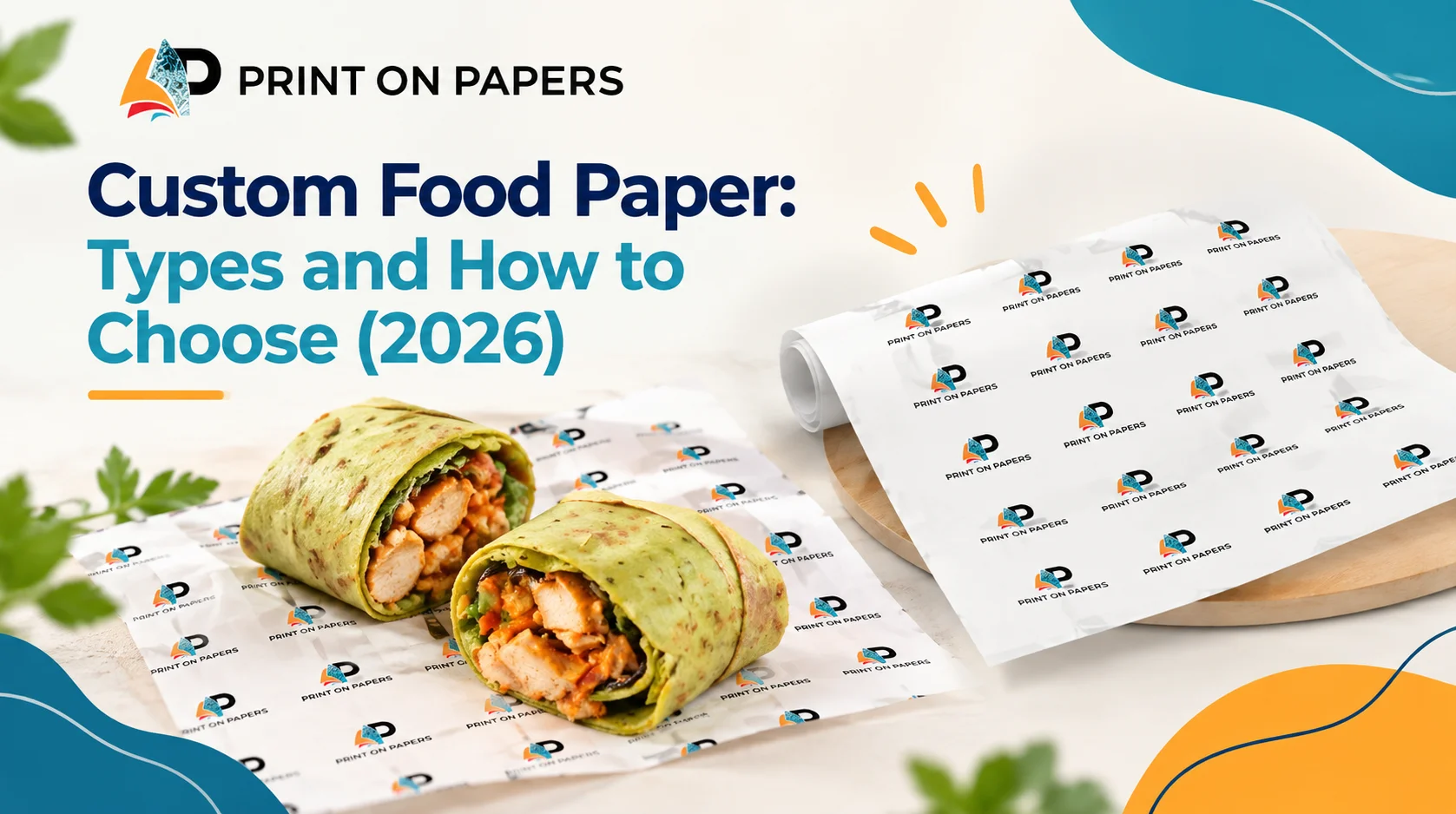
TLDR: This paper is not one product. Deli paper, greaseproof paper, butcher paper, and hot paper each carry a different GSM weight and heat rating. Pick the wrong one and grease bleeds through, or the coating melts on hot food. This guide covers FDA 21 CFR 176 status, PFAS free coatings, and which paper fits your business.
It is a food grade wrap or liner printed with a business logo for direct contact with food. Several types exist, each rated for a different job. Print On Papers prints this custom food papers line for restaurants, delis, and food trucks across the US.
Grease came through the bag before the customer got home. Or the coating went soft on a hot sandwich fresh off the press. Both trace back to one mistake, ordering the same type of custom food paper for every job in the kitchen.
Light deli paper wraps a cold sandwich fine, but it was never built to hold grease from fried food. A wax coating softens near high heat, so a grill line needs a different rating entirely. The fix is not a thicker sheet of the same paper. It is matching the coating and heat rating to what the paper actually touches.
A reprint run costs money. A customer who unwraps a soggy bag remembers that, not the logo on it.
For food served above 140 degrees Fahrenheit, choose paper rated for heat, not just grease. Custom hot paper holds up under fryer baskets, hot presses, and steam trays without softening or picking up odor.
Standard deli paper is rated for cold to moderate use, up to about 100 degrees. Push past that with fried chicken or a grilled panini, and the coating breaks down fast. Hot paper carries a heavier coating built to hold shape near 220 degrees, which matches most fryer stations.
Every type is built around two things, grease exposure and heat. The table below shows what each one is rated to handle.
| Paper Type | Heat Rating | GSM Range | Best For |
| Deli Paper | Cold to 100°F | 30 to 45 GSM | Sandwiches, cold cuts |
| Greaseproof Paper | Up to 200°F | 35 to 40 GSM | Fried food, burgers |
| Butcher Paper | Moderate to high heat | 40 to 90 GSM | Raw meat, smoking |
| Hot Paper | Up to 220°F | 35 to 45 GSM | Fryer baskets, hot presses |
| Freezer Paper | Sub zero | 45 to 55 GSM | Frozen meat storage |
Custom food wrapping paper covers the middle ground, moderate grease and moderate heat, fitting counters that serve a mix of hot and cold items.
Yes, when it meets federal and state rules, not just a marketing label. Every custom food paper sold under this line meets 21 CFR 176, the FDA standard for paper and paperboard that touches food directly. That is a citable regulation, and you can read it yourself at eCFR.gov.
Coatings across the line are PFAS free, which matters more now than a few years back. More than a dozen states, including California, New York, and Washington, now restrict or ban intentionally added PFAS in food packaging, based on state law tracking published by Packaging Digest. A supplier that cannot confirm PFAS free status in writing is worth questioning.
Sandwich counters run on custom sandwich paper, light enough for cold cuts but tough enough for a lunch rush. Taco spots need something that survives salsa and steam, which is what custom taco wrapping paper is built for.
Bagel shops line baskets with custom bagel paper, while burger joints lean on custom burger paper to handle grease from a fresh patty without soaking the bag. Casual dine in spots use custom food basket liners instead, catching grease at the tray level.
Check your top three sellers first. That tells you which paper type carries most of your volume, and where switching would cut the most reorders.
Stop guessing which custom food paper fits your line. Send your food type and order volume, and get matched to the right GSM and coating in one reply.
Print On Papers ships nationwide from Valley Stream, New York, with production in 7 to 10 working days.
| Question | Answer |
| Does it go in the microwave? | No. Coated food paper can scorch or release odor. Remove it before reheating. |
| Is custom food paper recyclable? | Most is recyclable where the local facility accepts coated paper. Heavily soiled sheets go in compost or trash instead. |
| What is the minimum order? | 500 sheets per paper type, no penalty for staying at that level. |
| Can it print in one color? | Yes. One color keeps cost lowest, and full CMYK is available for detailed logos. |
| How fast does it ship? | 7 to 10 working days from proof approval, with a 5 to 7 day rush option. |
Custom food paper only works when the coating and heat rating match the food it touches. Check your top sellers, compare them against the table above, and confirm FDA and PFAS status before you reorder. Get that right once, and grease stained bags stop being a recurring cost.
Print On Papers is a custom printed paper and wrapping paper company serving restaurants, bakeries, delis, food trucks, butchers, florists, apparel brands and food brands across the US and worldwide. We deliver food-safe, eco-friendly, fully branded custom paper, from your first 500 sheets to your next 500,000