
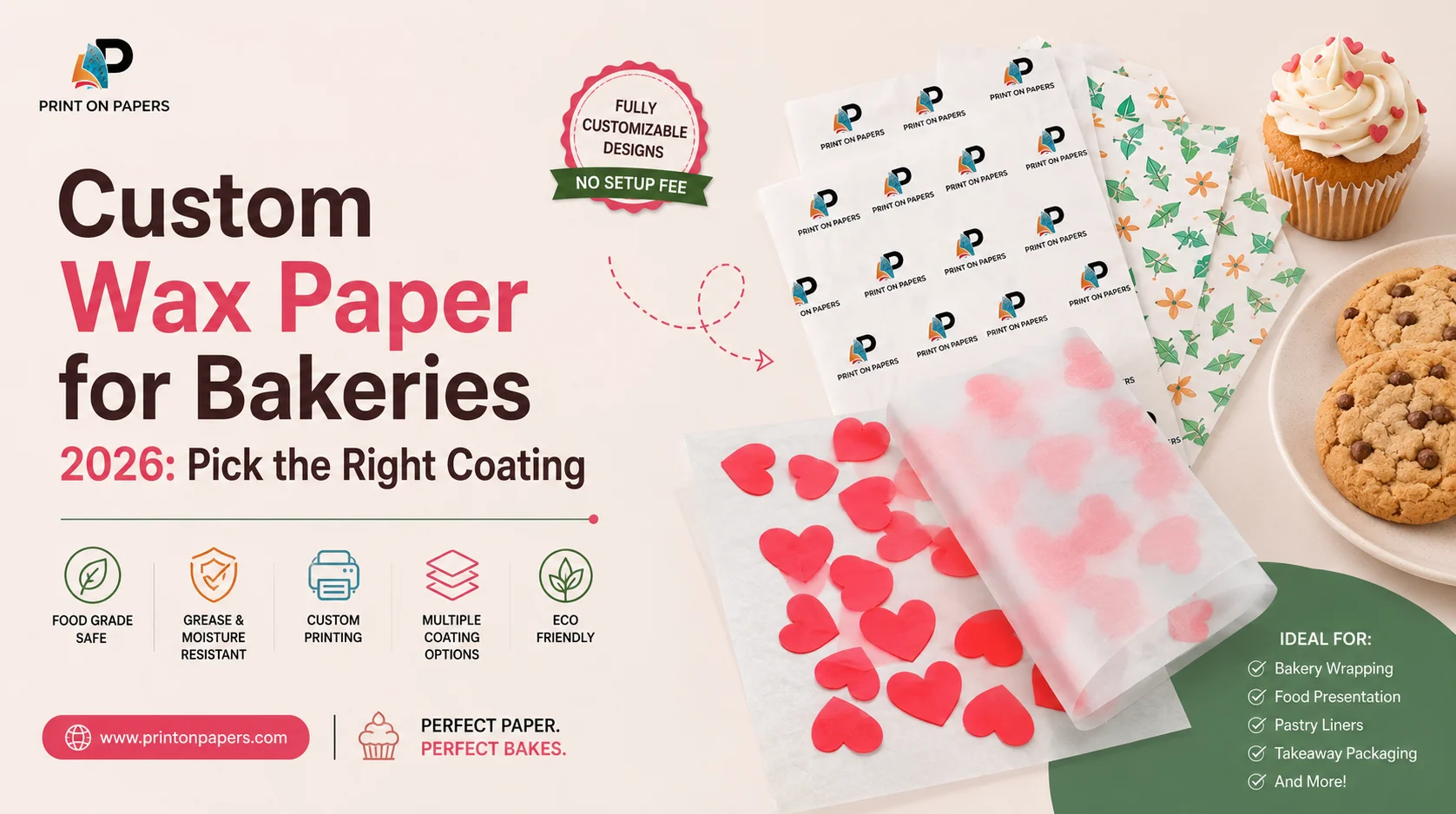
Custom Wax Paper for Bakeries 2026: Paraffin, Soy Wax, or Beeswax?
TLDR: Paraffin wax paper is cheaper and blocks moisture better, but it comes from petroleum. Soy wax sits in the middle, good for cookies and pastries. Beeswax custom wax paper works best for artisan bakeries that want something compostable and a bit more premium. Pick based on what you actually bake, not just the price per sheet.
Table of Contents
- Why This Decision Costs Bakeries More Than They Think
- What Is Custom Wax Paper for Bakeries 2026, and Why the Coating Matters
- Paraffin Wax Paper: The Affordable Standard
- Soy Wax Paper for Bakeries: The Middle Ground
- Beeswax Custom Wax Paper for Artisan Bakeries
- Paraffin vs Soy vs Beeswax: Quick Comparison
- Which Coating Fits Your Baked Good
- Custom Printed Wax Paper USA: Branding Without Breaking Compliance
- FAQs
- Get Your Custom Wax Paper Quote
- Conclusion
Why This Decision Costs Bakeries More Than They Think
A bakery owner in New Jersey called us last spring, pretty frustrated. She’d switched suppliers to save a few cents a sheet on her croissant wraps. Turned out the new paraffin wax paper was too thin for her morning rush. By 9am the wax had started coming off onto half her pastries, and onto her staff’s hands too. She lost a full tray of product, plus probably an hour of goodwill with the regulars standing in line watching it happen.
That’s not some rare story. It’s basically the most common reason bakeries reach out asking us what custom wax paper for bakeries 2026 actually means for them, and which coating fits what they bake. There’s no single right answer here. It comes down to your product, your budget, and how much sustainability actually matters to your customers versus how much it matters on paper.
This guide walks through paraffin, soy wax, and beeswax so you don’t end up guessing.
What Is Custom Wax Paper for Bakeries 2026, and Why the Coating Matters
Custom wax paper for bakeries 2026 starts out as plain kraft paper, either bleached white or left natural brown. A thin wax layer gets pressed into it through calendering, basically heated rollers running the wax evenly across the sheet. That coating is really the whole product. It’s what decides if your paper holds up against moisture, whether it breaks down naturally, and how it actually feels when a customer picks it up.
Right now there are three coatings bakeries choose between, and they fall under bakery wax paper types. Paraffin is refined from petroleum. Soy wax comes from soybean oil. Beeswax comes straight from honeycomb. Each one changes how the paper performs, what it costs you, and honestly, what it says about your brand.
Under US food contact rules, all three are allowed on food contact paper, covered under 21 CFR 176.170 and 176.180, the federal sections that deal with paper and paperboard touching food. That regulation doesn’t favor one wax over another. It just confirms all three are safe to use. The actual decision is yours, and it should come down to what you’re baking, not which one sounds the most impressive.
Paraffin Wax Paper: The Affordable Standard
Paraffin wax paper food use has been the industry default for decades now, and honestly there’s a reason it stuck around. It’s a petroleum byproduct, refined down into a wax that’s consistent and resists moisture really well. It’s also cheaper to produce than the other two, so your per sheet cost stays lower.
The catch is sustainability. Paraffin doesn’t come from a renewable source, and it won’t compost. Hywax, a material supplier that publishes research on this, found that paraffin coated paper actually contaminates regular paper recycling, since the wax won’t separate cleanly from the fiber when it’s reprocessed. So if your bakery leans into an eco-friendly angle for marketing, paraffin can work against that even though it performs perfectly fine on the counter.
Where it still makes sense is anything high volume and moisture heavy. Bread loaves, proofing trays, bulk cookie batches, all of that benefits from paraffin doing its job reliably at a lower cost.
Soy Wax Paper for Bakeries: The Middle Ground
We get the paraffin vs soy wax paper for cookies and pastries a lot, and soy usually comes out ahead for anything delicate. Soy wax is made from soybean oil, grown widely across US farms, and it’s biodegradable. It also doesn’t carry that petroleum baggage some customers actively try to avoid.
As for performance, soy wax paper bakery use holds up fine as long as the item doesn’t sit in heavy moisture for hours on end. Cookies, scones, muffins, individually wrapped pastries, all of that is well wrapped in soy coated paper. It costs a bit more than paraffin, though at wholesale volume that gap is usually pretty small.
The environmental side backs this up too. Hywax’s material analysis put plant based waxes, soy included, at roughly 0.35 to 0.56 kilograms of CO2 equivalent per kilogram produced, well below what petroleum extraction and refining costs for paraffin. That’s a real, usable number if a customer asks why your wrap costs slightly more.
Beeswax Custom Wax Paper for Artisan Bakery USA Demand
Beeswax food paper sits at the top end. It’s fully natural, fully compostable, and has this faint honey smell that fits well with an artisan brand. Beeswax custom wax paper for artisan bakery USA shops tends to show up most at specialty bakeries, farmers markets, and places building a more premium identity.
That same Hywax data puts beeswax at the lowest footprint of the three, somewhere around 0.14 to 0.33 kilograms of CO2 equivalent per kilogram. It’s a touch less moisture resistant than paraffin though, so it works better on drier baked goods rather than anything releasing a lot of butter or oil.
Cost is really the main tradeoff. Beeswax just doesn’t get harvested at the same scale as soy or petroleum, so the price per sheet runs higher. For bakeries where the premium feel and the story behind it justify that, it earns its place.
Paraffin vs Soy vs Beeswax: Quick Comparison
| Coating | Best For | Sustainability | Relative Cost |
| Paraffin | Bread, high moisture items | Petroleum based, not compostable | Lowest |
| Soy Wax | Cookies, pastries, scones | Renewable, biodegradable | Moderate |
| Beeswax | Artisan pastries, premium lines | Compostable, lowest carbon footprint | Highest |
Which Coating Fits Your Baked Good
The real move here is matching the coating to what you actually bake, not chasing whatever trend feels right. Heavy, moisture heavy items like fresh bread or buttery danishes do better with paraffin, or a heavier soy blend if you want to skip petroleum. Cookies and pastries with moderate moisture do fine in soy coated custom wax paper coating types. Anything delicate and dry, meant for a premium display case, that’s where beeswax earns its cost.
If your bakery also runs a small savory counter on the side, this same logic carries over. A shop wrapping breakfast bagels next to its pastry case usually pairs that wax paper with custom bagel paper for the savory items, since bagels need a different grease profile than anything sweet.
Custom Printed Wax Paper USA: Branding Without Breaking Compliance
Bakery wax paper with logo printing goes on the non food contact side, using soy based or water based inks. That keeps your branding completely separate from anything touching the actual food, which matters for staying compliant. Full color CMYK printing or Pantone matched colors both come out clean on wax coated stock.
If your bakery also sells sandwiches up front, the same branding carries naturally over to custom sandwich paper, so your look stays consistent no matter what a customer is holding when they walk out.
FAQs
Is paraffin wax paper safe for food contact in 2026?
Yes. Paraffin is still permitted under 21 CFR 176.170 for food contact paper, and it’s been used safely in food packaging for decades.
Which wax paper coating for bakery USA 2026 is most eco friendly?
Beeswax has the lowest carbon footprint of the three coatings, with soy wax close behind. Paraffin is the least sustainable since it’s petroleum based.
Can I print my logo on custom wax paper wholesale orders?
Yes. The printing goes on the non food contact side using food safe inks, so your branding never actually touches the product.
Is beeswax wax paper compostable?
Yes. Beeswax coated paper breaks down naturally under regular composting conditions, unlike paraffin coated sheets.
What is the minimum order for custom printed wax paper USA bakeries?
It depends on the supplier, though a lot of manufacturers, Print On Papers included, accept orders starting around 500 sheets, which works fine for smaller or growing bakeries.
Get Your Custom Wax Paper Quote
You don’t have to guess between paraffin, soy, or beeswax on your own. Tell us what you bake, and the Print On Papers team will point you toward the coating that actually fits your product and your budget.
Request Your Free Wax Paper Quote →
Conclusion
Custom wax paper for bakeries 2026 really comes down to three honest tradeoffs. Paraffin gets you the lowest cost and the strongest moisture barrier. Soy wax gets you a renewable middle ground that suits cookies and pastries well. Beeswax gets you a compostable, premium option if your artisan line can absorb the higher cost. None of these is the universally right pick. The right one is whatever matches what’s actually coming out of your oven, and a short conversation with your paper supplier can settle that before your next order goes out.